VoIP providers minimize latency by supporting point-to-point SIP calls, operating a global POP network and maintaining modern codecs. Dip into our guide and choose your VoIP provider wisely.
Voximplant serverless architecture provides a simpler alternative to deploying traditional VoIP servers in a datacenter. Voximplant APIs offer developers scale and on-demand communications services. Learn how easily you can create VoIP services in the form of Voximplant-based apps.
Now Smartcalls users can choose from a set of affordable plans, integrate with an existing SIP, and enroll into the beta program of Dialogflow and Smartcalls engagement – a next-level solution, that will easily enrich call scenarios with an IVR of any complexity.
Voximplant now includes a native MCP Client for VoxEngine, giving developers direct connectivity to any MCP server and full control over every tool call
Voximplant now includes a native Cartesia module for streaming, low-latency text-to-speech (TTS). You can use a single VoxEngine API to synthesize speech in real time, connect it to any call (PSTN, SIP, WebRTC, WhatsApp) and control playback from a Large Language Model (LLM) or other source, all inside VoxEngine.
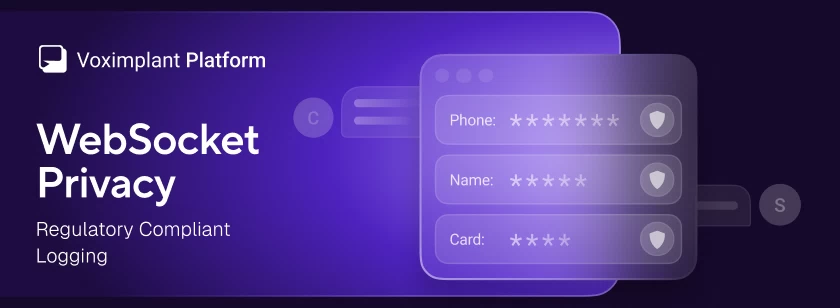
Voximplant has added a WebSocket privacy option that redacts message payloads from logs across all WebSocket-based services – Voice AI connectors and external speech system – and speech control modules
A practical guide to running a compliant voice AI stack on Voximplant: EU data residency, compliance documentation, and what to verify at each layer — telephony, LLM, STT, and TTS
Use Realtime API in VoxEngine to build speech-to-speech voice AI with data residency control. Set baseUrl to any OpenAI Realtime-compatible endpoint, including Azure EU deployments, and control where call audio is processed




 2020-12-04
 162649