According to IDG researchers, 77% of companies today use cloud technology. On the other hand, with increasing popularity, they are becoming more susceptible to cyberthreats. According to Kaspersky Lab, every tenth (10%) leak of data from the cloud was a result of the provider’s actions, while a third of all cyber incidents in the cloud (33%) occurred from employee oversight.
Voximplant now includes a native Deepgram module that connects any Voximplant call to Deepgram’s Voice Agent API for real-time, speech‑to‑speech conversations. You can stream audio from phone numbers, SIP trunks, WhatsApp, or WebRTC into Deepgram’s unified agent environment—combining STT, LLM reasoning, and TTS—and play responses via Voximplant’s serverless runtime with minimal latency.
Voximplant now includes a native Grok module that connects any Voximplant call to xAI’s Grok Voice Agent API for real-time, speech-to-speech conversations. With a single VoxEngine scenario, you can interact via audio with Grok over phone numbers, SIP trunks and infrastructure, WhatsApp Business, or WebRTC into Grok — all without building custom media gateways or WebSocket streaming infrastructure.
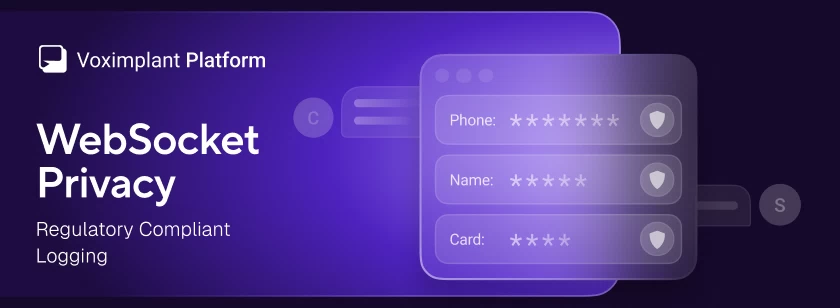
Voximplant has added a WebSocket privacy option that redacts message payloads from logs across all WebSocket-based services – Voice AI connectors and external speech system – and speech control modules
Voximplant now supports Inworld's Realtime API, so you can bring Inworld's expressive, conversation-aware agents into real phone calls, SIP, and WhatsApp without custom media infrastructure
Use Realtime API in VoxEngine to build speech-to-speech voice AI with data residency control. Set baseUrl to any OpenAI Realtime-compatible endpoint, including Azure EU deployments, and control where call audio is processed
Voximplant now includes a native Cartesia Line / Agents connector that connects any Voximplant call to a Cartesia Line voice agent for real-time, speech-to-speech conversations—over PSTN, SIP, WebRTC, or WhatsApp Business Calling—without building custom media gateways or WebSocket streaming infrastructure.




 2019-11-12
 193797